Why Your AI Initiative Will Stall (And It Has Nothing to Do with the Technology)

Written by Sara Spalt
I’ve watched the same pattern play out enough times that I’ve started to recognize it early.
An association makes a real investment in AI — a tool, a policy, a training program, sometimes all three. The launch goes well. Leadership is engaged. Staff complete the training. For a few months, there’s visible momentum.
Then it quietly slows down. Usage doesn’t grow. Staff revert to old habits. The internal champion moves on to other priorities. A year later, the organization is assessing whether to start over or try a different tool.
When I get involved in these situations and we work backward to understand what happened, the technology almost never shows up as the cause. The tools were fine. The problem was everything around them.
The Part That Gets Underestimated
Every major system change in an organization requires three things to stick: people who understand why the change matters, someone with ongoing accountability for making it work, and enough support that staff feel safe trying something new.
Associations know this. Organizations that have been through a major AMS migration or a significant process change have often learned it the hard way. The implementation itself goes smoothly enough; the hard part is getting people to actually use the new system, trust it, and eventually build their work around it.
AI adoption has the same shape — with one complicating factor. The pace of change is faster. Tools that required significant organizational commitment six months ago are now consumer-accessible. Staff are making their own decisions about what to use and how, regardless of what official guidance exists. By the time an organization launches a formal initiative, adoption is often already underway informally, just without structure or consistency.
That means the window for establishing culture, norms, and expectations is shorter than it used to be.
What Stalls Most Initiatives
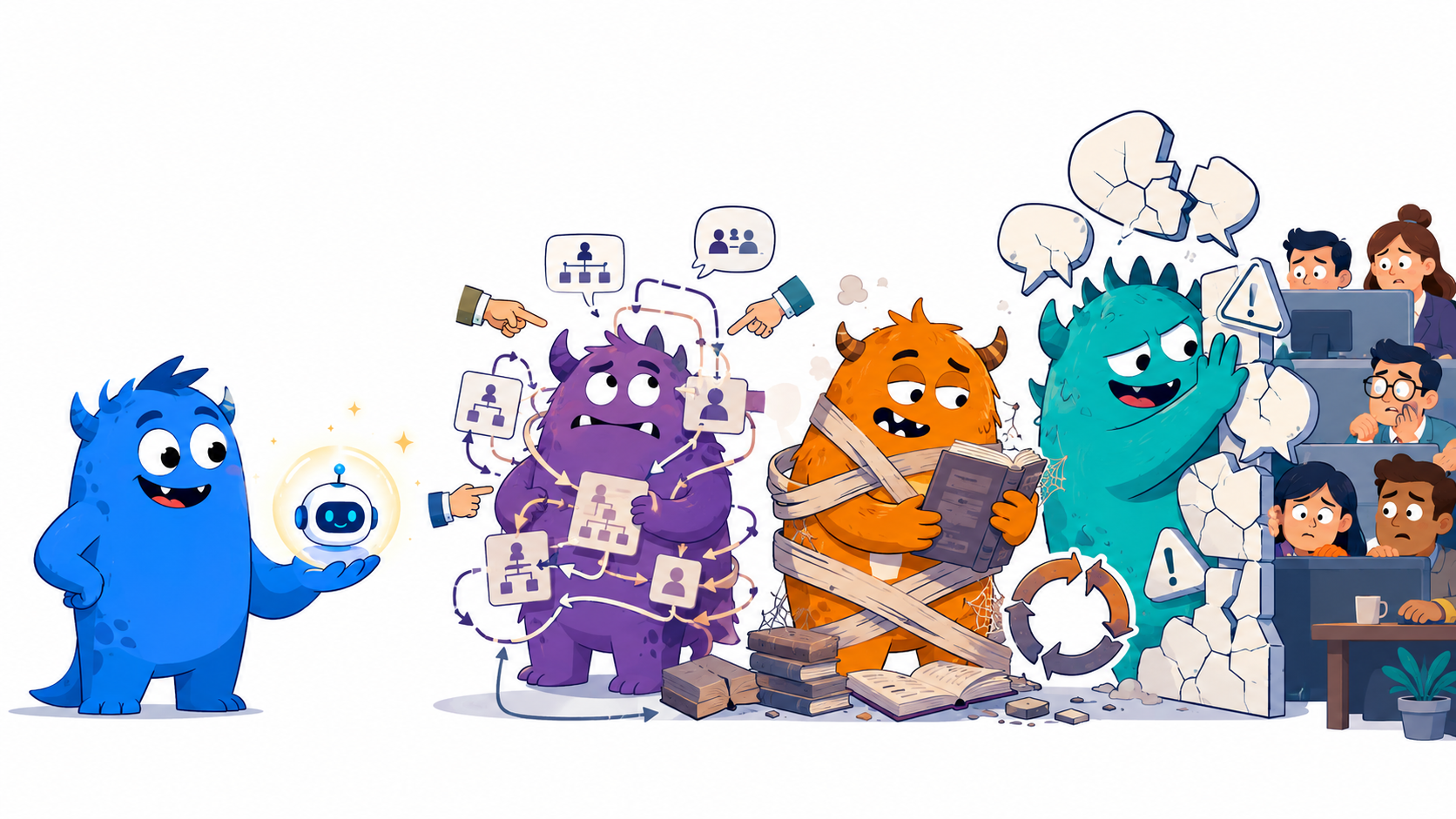
Unclear ownership is usually the first crack. Successful AI programs have someone with real accountability — not just for the launch, but for what happens afterward. When that person is a project manager whose role ends when the deliverables are done, or a committee that meets quarterly and then stops, the initiative tends to drift.
Training that happens once and doesn’t get reinforced is the second. Staff leave sessions with good intentions and reasonable knowledge. But if nothing in their daily work reinforces what they learned — if their manager doesn’t mention AI, if their team doesn’t talk about it, if there’s no place to ask questions when something confusing comes up — the learning fades quickly and the tools go unused.
A culture that punishes mistakes is the third. This one is harder to see because it rarely announces itself. Staff don’t say they’re afraid to experiment; they just don’t. If the organizational reflex when something goes wrong is to look for who made the error rather than what can be learned from it, people will avoid situations where errors are possible. AI use cases almost always involve some trial and error, especially early on.
What the Organizations Getting It Right Actually Do
The associations where AI adoption is genuinely taking hold share a few things.
Someone in a senior leadership role is visibly engaged — not as a cheerleader, but as a participant. They talk openly about what they’re using, what they’re learning, and where they’re still uncertain. That visibility signals to staff that experimentation is acceptable and that leadership isn’t holding itself to a different standard.
There are people embedded across the organization who serve as a connective layer between the formal program and day-to-day work. These aren’t necessarily people with “AI” in their title. They’re colleagues who are curious, willing to help, and have enough standing in their teams to normalize the conversation.
And the initiative has a regular cadence — a standing meeting, a survey, a review of what’s working — that keeps it from becoming a historical artifact. The organizations that stall treat launch as the finish line. The ones that sustain progress treat it as the starting point.
The Bigger Takeaway
If your AI initiative is stalling, the first place to look probably isn’t the tool you chose or the vendor you selected. It’s worth asking whether someone has clear, ongoing accountability. Whether staff have real support for experimentation. Whether the organization’s culture makes it safe to not know something yet.
Those questions aren’t technology questions. But they’re the ones that tend to determine what happens next.

Related Posts